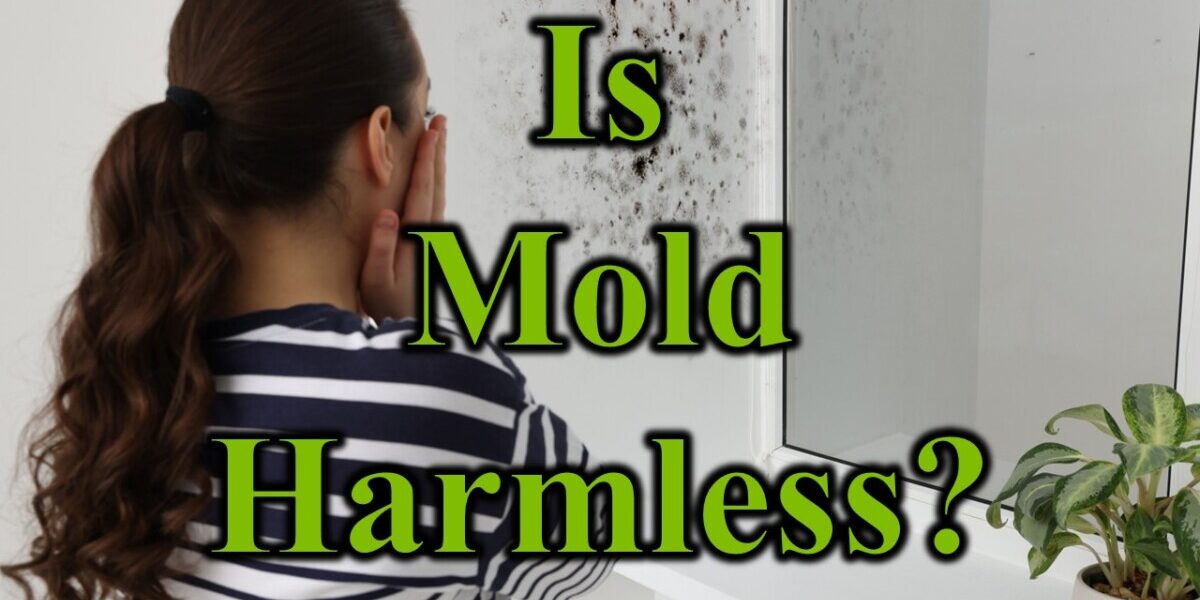
Mainstream medicine downplays and even ridicules the reality of mold toxicity from water damaged buildings, but they seem to have skipped reading articles like this and the citations within it. While the researchers did not do the studies themselves, they compiled the published studies to look at the problem from different angles. They looked at which mold species were in which buildings. They looked at what conditions were needed to aerosolize mold fragments and mycotoxins leading to opportunities for human inhalation. They looked at studies showing how humans were affected by mold exposure. They thus covered a lot of bases that are very difficult to ignore.
Noting that people in industrialized countries can spend more than 80% of their time inside, the authors sought to add to understanding the effects of mold growth in these water damaged buildings (11,12). The microbial growth—which, besides mold, also includes bacteria, viruses, and their organic compounds including endotoxins—contribute the aerosols which inhabitants of the buildings breath (16,17). These biological contaminants to indoor air may adversely affect their health (16,17,19,20,21, 22,23, 24,25,26,27).
In an early section of their paper, they describe the process by which mold growing on various building materials can be released into the air. This comes through obvious processes of air flow, direct handling, and other daily human activities. In some studies, other researchers found that fragments were released into the air in greater concentrations than spores (47). In cited studies, these smaller fragments could penetrate deeper into subjects lungs than the larger spores (41, 47).
From the paper based on a mix of air and dust sampling:
“Based on the data collected in these studies, over 50 different fungal species were identified from 19 fungal genera on the surfaces of materials. Most of the detected species belong to the genera Aspergillus, Cladosporium, Stachybotrys, Penicillium, Alternaria and Ulocladium. Overall, the top ten detected species on the surface of materials from all studies (n = 34) are: Aspergillus versicolor (detected in 74% of the studies), A. niger (68%), A. fumigatus (53%), Cladosporium sphaerospermum (41%), Stachybotrys chartarum (32%), Penicillium chrysogenum (29%), Aspergillus flavus (26%), Alternaria alternata (21%), Cladosporium cladosporioides (18%) and Ulocladium chartarum (15%).”
So what if mold is flying around us? Unless it hurts us, why would we care? Well, they do cite a number of studies linking different molds to different health problems in animals and humans.
- Aspergillus versicolor and its toxins: allergies, immunosuppression, asperigilloses (129,132,133,134)
- Aspergillus niger and toxins: kidney failure
- Aspergillus fumigatus…: pulmonary infection, immune effects, and farm animal abortions (62,63,64,65)
- Stachybotrys chartarum…: pulmonary inflammation, protein synthesis inhibition. (66,67,68).
- Aspergillus flavus…: liver cancer, immune suppression, allergies. (30,111,139,144)
They noted the presence of less research for the aerosolization of mycotoxins, but shared what was reported. The following mycotoxins have been reported in air samples from USA and European homes.
- Trichothecenes
- Chaetoglobosin A
- Aflatoxins B1, B2
- Roridin E
- Ochratoxin A
- Satratoxin
- Sterigmatocystins
- Gliotoxin
Given the number of patients who we have seen and treated for mold toxicity, none of this comes as any surprise to providers at Sanctuary, here in Franklin, Tennessee. But mainstream medicine just won’t accept the reality of the evidence. Until they do, we will keep looking to papers like this and caring for those who are suffering needlessly. Helping them restore healthier, more abundant lives requires addressing mold toxins in them and the mold growth in their living environment.
Original Article:
Al Hallak, M., Verdier, T., Bertron, A., Roques, C., & Bailly, J. D. (2023). Fungal Contamination of Building Materials and the Aerosolization of Particles and Toxins in Indoor Air and Their Associated Risks to Health: A Review. Toxins, 15(3), 175. https://doi.org/10.3390/toxins15030175
Citations mentioned here.
- Nielsen K.F. Mycotoxin Production by Indoor Molds. Fungal Genet. Biol. 2003;39:103–117. doi: 10.1016/S1087-1845(03)00026-4.
12.Platt S.D., Martin C.J., Hunt S.M., Lewis C.W. Damp Housing, Mould Growth, and Symptomatic Health State. BMJ. 1989;298:1673–1678. doi: 10.1136/bmj.298.6689.1673.
16.Srikanth P., Sudharsanam S., Steinberg R. Bio-aerosols in indoor environment: Composition, health effects and analysis. Indian J. Med. Microbiol. 2008;26:302–312. doi: 10.1016/S0255-0857(21)01805-3.
17.Douwes J., Thorne P., Pearce N., Heederick D. Bioaerosol Health Effects and Exposure Assessment: Progress and Prospects. Ann. Occup. Hyg. 2003;47:187–200. doi: 10.1093/annhyg/meg032.
19.Humbal C., Gautam S., Trivedi U. A Review on Recent Progress in Observations, and Health Effects of Bioaerosols. Environ. Int. 2018;118:189–193. doi: 10.1016/j.envint.2018.05.053.
20.Kim K.-H., Kabir E., Jahan S.A. Airborne Bioaerosols and Their Impact on Human Health. J. Environ. Sci. 2018;67:23–35. doi: 10.1016/j.jes.2017.08.027. [
21.Manisalidis I., Stavropoulou E., Stavropoulos A., Bezirtzoglou E. Environmental and Health Impacts of Air Pollution: A Review. Front. Public Health. 2020;8:14. doi: 10.3389/fpubh.2020.00014.
22.Buzea C., Pacheco I.I., Robbie K. Nanomaterials and Nanoparticles: Sources and Toxicity. Biointerphases. 2007;2:MR17–MR71. doi: 10.1116/1.2815690.
23.Baxi S.N., Portnoy J.M., Larenas-Linnemann D., Phipatanakul W., Barnes C., Baxi S., Grimes C., Horner W.E., Kennedy K., Larenas-Linnemann D., et al. Exposure and Health Effects of Fungi on Humans. J. Allergy Clin. Immunol. Pract. 2016;4:396–404. doi: 10.1016/j.jaip.2016.01.008.
24.Dales R.E., Zwanenburg H., Burnett R., Franklin C.A. Respiratory Health Effects of Home Dampness and Molds among Canadian Children. Am. J. Epidemiol. 1991;134:196–203. doi: 10.1093/oxfordjournals.aje.a116072.
25.Cooley J.D., Wong W.C., Jumper C.A., Straus D.C. Correlation between the Prevalence of Certain Fungi and Sick Building Syndrome. Occup. Environ. Med. 1998;55:579–584. doi: 10.1136/oem.55.9.579.
26.Bush R.K., Portnoy J.M., Saxon A., Terr A.I., Wood R.A. The Medical Effects of Mold Exposure. J. Allergy Clin. Immunol. 2006;117:326–333. doi: 10.1016/j.jaci.2005.12.001.
27.ANSES . Moisissures dans le Bâti. ANSES; Paris, France: 2016.
30.Hedayati M.T., Pasqualotto A.C., Warn P.A., Bowyer P., Denning D.W. Aspergillus flavus: Human Pathogen, Allergen and Mycotoxin Producer. Microbiology. 2007;153:1677–1692. doi: 10.1099/mic.0.2007/007641-0.
41.Mensah-Attipoe J., Toyinbo O. Fungal Infection. IntechOpen; London, UK: 2019. Fungal Growth and Aerosolization from Various Conditions and Materials.
47.Górny R.L., Reponen T., Willeke K., Schmechel D., Robine E., Boissier M., Grinshpun S.A. Fungal Fragments as Indoor Air Biocontaminants. Appl. Environ. Microbiol. 2002;68:3522–3531. doi: 10.1128/AEM.68.7.3522-3531.2002.
66.Švajlenka J., Kozlovská M., Pošiváková T. Assessment and Biomonitoring Indoor Environment of Buildings. Int. J. Environ. Health Res. 2017;27:427–439. doi: 10.1080/09603123.2017.1373276.
67.Adams R.I., Sylvain I., Spilak M.P., Taylor J.W., Waring M.S., Mendell M.J. Fungal Signature of Moisture Damage in Buildings: Identification by Targeted and Untargeted Approaches with Mycobiome Data. Appl. Environ. Microbiol. 2020;86:e01047-20. doi: 10.1128/AEM.01047-20. [
68.Pereira C., de Brito J., Silvestre J.D. Contribution of Humidity to the Degradation of Façade Claddings in Current Buildings. Eng. Fail. Anal. 2018;90:103–115. doi: 10.1016/j.engfailanal.2018.03.028.
111.Gibson A.M., Baranyi J., Pitt J.I., Eyles M.J., Roberts T.A. Predicting Fungal Growth: The Effect of Water Activity on Aspergillus flavus and Related Species. Int. J. Food Microbiol. 1994;23:419–431. doi: 10.1016/0168-1605(94)90167-8.
129.Egbuta M.A., Mwanza M., Babalola O.O. Health Risks Associated with Exposure to Filamentous Fungi. Int. J. Environ. Res. Public Health. 2017;14:719. doi: 10.3390/ijerph14070719.
132.Tseng C.-C., Huang N., Hsieh C.-J., Hung C.-C., Guo Y.-L.L. Contribution of Visible Surface Mold to Airborne Fungal Concentration as Assessed by Digital Image Quantification. Pathogens. 2021;10:1032. doi: 10.3390/pathogens10081032.
133.Bjurman J., Kristensson J. Volatile Production by Aspergillus versicolor as a Possible Cause of Odor in Houses Affected by Fungi. Mycopathologia. 1992;118:173–178. doi: 10.1007/BF00437151.
134.Reijula K., Tuomi T. Mycotoxins of Aspergilli; Exposure and Health Effects. Front. Biosci. Landmark. 2003;8:232–235. doi: 10.2741/978.
139.Khalil N.M., Abd El-Ghany M.N., Rodríguez-Couto S. Antifungal and Anti-Mycotoxin Efficacy of Biogenic Silver Nanoparticles Produced by Fusarium chlamydosporum and Penicillium chrysogenum at Non-Cytotoxic Doses. Chemosphere. 2019;218:477–486. doi: 10.1016/j.chemosphere.2018.11.129.
144.International Agency for Research against Cancer . Some Industrial Chemicals. Volume 60. IARC Publications; Geneva, Switzerland: 1994. Monographs on the Evaluation of Carcinogenic Risks to Humans; pp. 389–433.
Sanctuary Functional Medicine, under the direction of Dr Eric Potter, IFMCP MD, provides functional medicine services to Nashville, Middle Tennessee and beyond. We frequently treat patients from Kentucky, Alabama, Mississippi, Georgia, Ohio, Indiana, and more... offering the hope of healthier more abundant lives to those with chronic illness.

Dr. Eric Potter graduated from Vanderbilt Medical School and then went on to specialize in internal medicine (adult) and pediatric care, spending significant time and effort in growing his medical understanding while caring for patients from all walks of life.