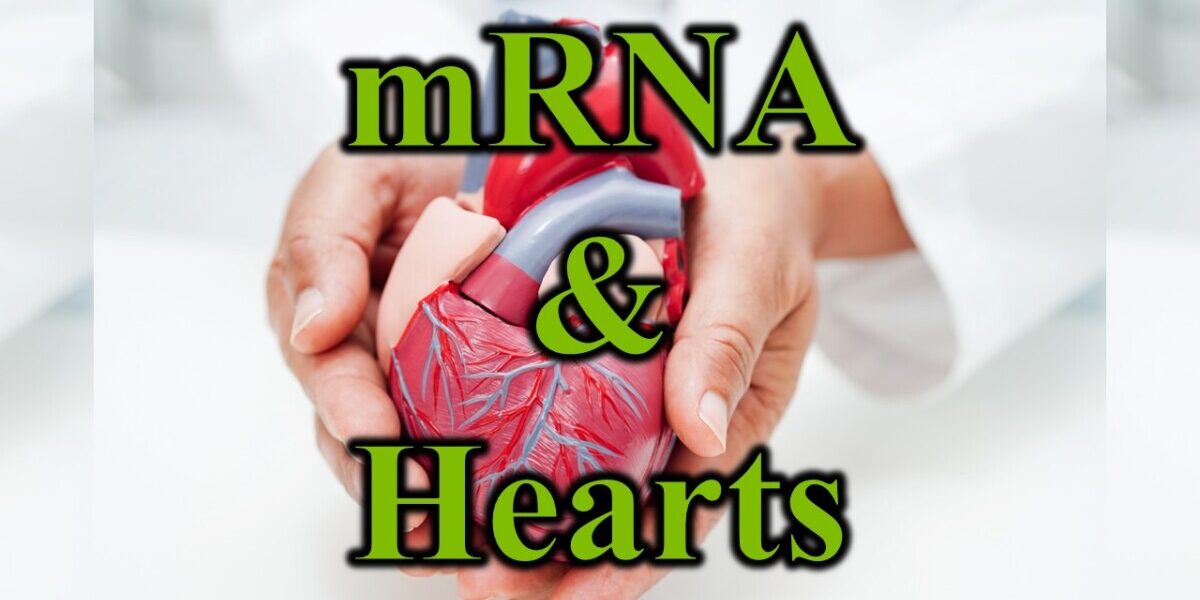
Science is never settled, especially with COVID and the immune system. Stanford researchers uncovered some of the mechanisms by which mRNA vaccines contribute to myocarditis (heart inflammation). With social media chatter and news channel headlines highlighting how many young COVID vaccine recipients have fallen dead or suffer some heart injury, those with their eyes open know that something is up. Those news flashes were not quite enough to prove scientifically that COVID or its vaccine was contributing to these scary incidents, but this study provides the causal links many of us have been looking for.
While the authors make sure that everyone knows their stance on the safety of COVID mRNA vaccines, several questions need to be asked after we consider the basic findings of the study. The researchers performed a two-step process beginning with exposing one immune cell type to the mRNA vaccine (macrophages) and observing what chemicals are produced. In this case, a cytokine called CXCL10 was produced at higher levels. When T-cells (another immune cell) was added to this mix of macrophages and CXCL10, the T-cells increased their production of Interferon gamma (IFM-gamma).
From there, the researchers vaccinated mice with the mRNA and looked at whether markers of heart inflammation like troponin were elevated. When they examined the mice hearts, they found that macrophages and another immune cell called neutrophils were increased in the heart muscle. They noted that this is similar to what is seen in patients with myocarditis after vaccination. They also noted an increase in proteins called ‘adhesion molecules’ which help immune cells move out of the bloodstream and into the heart muscle. To confirm that the CXCL10 and IFN-gamma were behind the inflammation, they blocked each of these cytokines and blocked the damage and changes seen previously.
They further created small organoids of heart cell clumps from stem cells and exposed these organoids to the same cytokines. Again, they found the same signs of heart muscle stress.
I can’t easily answer all the question I have, but I will share them anyway. First, I have questions about their statement of vaccine safety. I would want to know how they came up with their statistics for the incidence of myocarditis after doses 1 and 2 of the vaccine. If they went off raw VAERS reports, that factor is likely 10 times higher; the underreporting in VAERS is widely acknowledged. Besides that, as I stated earlier, science is never settled. We watch, we learn. We test, we learn. We keep learning. I don’t know if we can be so sure about the vaccine safety just yet.
Second, they did not address whether someone should be allowed to opt out of the vaccine administration. Even if they think the risk is low, should a known risk be made mandatory?
Third, while they emphasize that only 1 in 140,000 adults have myocarditis reactions after vaccination, I wonder what the rate of myocarditis was in their mice. Did they expose 140,000 mice to get 1 reaction or was the rate much higher? Without the paper access, I can’t answer that question, but the question is legitimate and concerning.
Fourth and finally, while the 1 in 140,000 may be true statistics (debatable), do a higher rate of individuals have milder (subclinical) myocarditis. If we screened everyone, would we find more cardiac markers elevated? If we monitored vaccine recipients for longer periods, would we eventually start seeing more late-onset adverse events? Those are questions that the public deserves to have answered.
Helping our patients restore healthier, more abundant lives requires asking good questions not only during patient visits but also about the studies we read. As science develops, we should not settle too early for “easy” answers.
Get started with Sanctuary today!
Click below to schedule your first conversation with our Patient Support Team.
Original Article:
Xu Cao, Amit Manhas, Yi-Ing Chen, Arianne Caudal, Gema Mondejar-Parreño, Wenjuan Zhu, Wenqiang Liu, Xiaohui Kong, Wenshu Zeng, Lichao Liu, Shane R. Zhao, James W. S. Jahng, Paul J. Utz, Kari C. Nadeau, Masataka Nishiga, Joseph C. Wu. Inhibition of CXCL10 and IFN-γ ameliorates myocarditis in preclinical models of SARS-CoV-2 mRNA vaccination. Science Translational Medicine, 2025; 17 (828) DOI: 10.1126/scitranslmed.adq0143
Thanks to Science Daily:
Stanford Medicine. “Stanford scientists uncover why mRNA COVID vaccines can trigger heart inflammation.” ScienceDaily. ScienceDaily, 27 December 2025. <www.sciencedaily.com/releases/2025/12/251227082716.htm>.
Sanctuary Functional Medicine, under the direction of Dr Eric Potter, IFMCP MD, provides functional medicine services to Nashville, Middle Tennessee and beyond. We frequently treat patients from Kentucky, Alabama, Mississippi, Georgia, Ohio, Indiana, and more... offering the hope of healthier more abundant lives to those with chronic illness.

Dr. Eric Potter graduated from Vanderbilt Medical School and then went on to specialize in internal medicine (adult) and pediatric care, spending significant time and effort in growing his medical understanding while caring for patients from all walks of life.