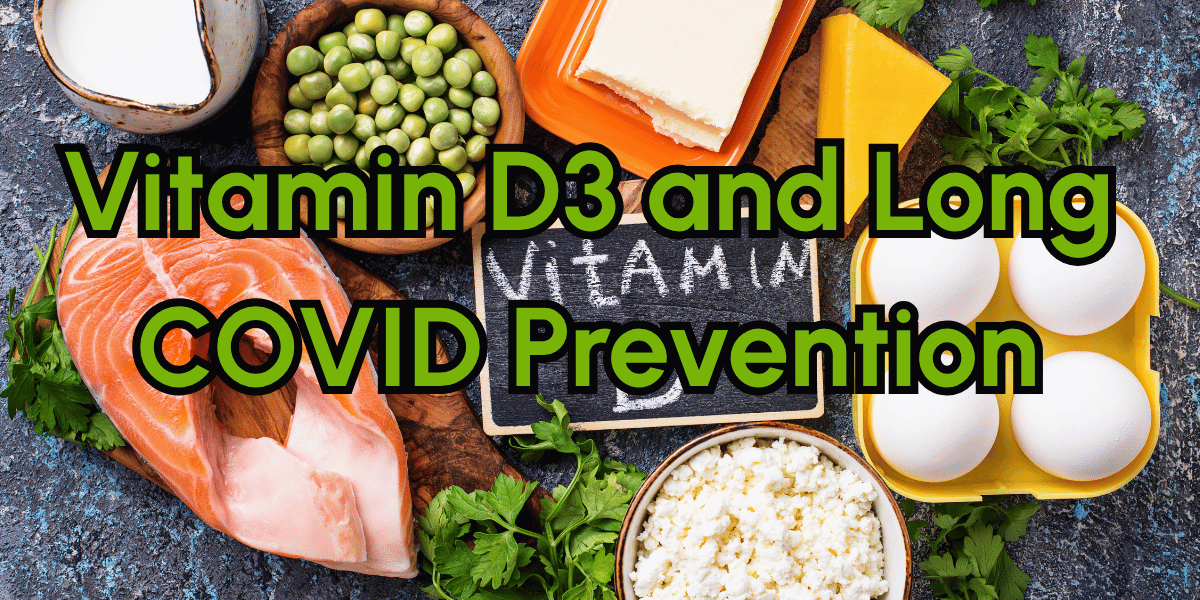
Vitamin D3 and Long COVID Prevention
While we are all sick and tired of hearing about COVID, we are stuck with the virus’s effects and everyone is searching for answers like this study’s discovery. Researchers were looking at the possibility that taking Vitamin D3 starting shortly after COVID diagnosis could serve as a therapy. Instead, they found that it may lower the risk of long COVID symptoms weeks later. While the acute complications of COVID appeared similar after 4 weeks of D3, the rate of Long COVID symptoms dropped from 25% to 21%.
Background
Although COVID needs little introduction, the idea of using vitamins to treat such a problematic virus might be new to some and old hat to others, so let’s take it from the top. The article reviews other research linking Vitamin D3 to improved immune function. They cite multiple studies showing good effects on antiviral immunity and list mechanisms such as increasing antimicrobial peptides and altering proinflammatory cytokines. Since observational studies suggested low vitamin D3 levels put people at risk for more severe COVID illness, the current researchers hoped treating patients with D3 would prove to be reliably beneficial to COVID sufferers.
What This Study Did
In light of conflicting results from other research, this group randomized people with a recent COVID diagnosis and gave them either a placebo or 9600 units of D3 for 2 days followed by 1 month of 3200 units daily. The participants’ symptoms were measured at baseline, on day 3, and for weeks 2,3, 4, and 8. They were not allowed to take any extra vitamin D3 on their own. About 1000 participants came from the United States, and 700 from Mongolia.
They also measured Vitamin D3 levels before and after therapy. Both the treatment group and the placebo group started with average levels around 37-38 for D3. Interestingly (and I will return to this point later), those on the real vitamin D3 therapy only outpaced the non-treatment group’s average level by 4.58 in the US group (and 2.7 in the Mongolian group).
What They Found
In the four weeks of therapy, the group taking vitamin D3 did not show any differences from the placebo in terms of acute symptoms or needing medical care. This was disappointing for hopes of using vitamin D3 after COVID diagnosis.
However, when measuring what percentage of participants reported 1 or more ongoing symptoms at the 8-week check-in, they found a decrease from 25% in the placebo to 21% in the therapy group. This result was just slightly statistically significant (increasing the chance that this was a real difference rather than random chance).
My Take on the Study
In functional medicine, we aim at a higher level of vitamin D3 for our patients, more in the 50-70 range, in order to optimize patient health not just for immunity but for multiple other factors. This study started with participants whose rates were already sub-optimal and looked to see if increasing D3 acutely would make a difference.
I am not surprised that they found no difference in acute COVID. First, the cat was out of the bag at the start, when the participants got COVID with already-low D3 levels. Those low levels, in the 30s, weren’t going to help with an acute COVID infection. Second, the study only gave them 9600 units for 2 days and then 3200 units for 4 weeks. This was nowhere near enough to boost levels fast enough to help with acute symptoms. Third, if the treatment group only increased D3 levels into the low 40s, they were still less likely to see much short-term benefit. We wouldn’t expect that until they reached the 50s.
One side note, from this study it appears that taking 3200 units daily for 4 weeks will not raise vitamin D3 levels that much. Data like this is why we use higher levels for our patients and retest blood levels to be sure we reach the 50s or 60s. Despite all the news complaints about natural providers recommending too much D3, this study seems to support our practice of higher-than-conventional dosing.
Takeaways:
Vitamin D3 doesn’t work as well for acute COVID if you start it after diagnosis.
Low-dose Vitamin D3 in supplements is not enough to raise your levels very much.
BUT… If you’re not taking D3 before COVID diagnosis, it is probably a good idea to start so your chances of long COVID symptoms are lower.
Parting Words
In functional medicine, we are at least as science-based as conventional medicine claims to be. I would say that we go a step further by thinking beyond simple conclusions from studies like this in order to help our patients restore healthier, more abundant lives. The patients we care for, from Franklin, Metro Nashville, and across Tennessee, deserve the full benefits of research, deserve this high level functional medicine, not just what pharma companies want us to provide.
Get started with Sanctuary today!
Click below to schedule your first conversation with our Patient Support Team.
https://sanctuaryfunctionalmedicine.com/contact-us-2/
Original Article:
Davaasambuu Ganmaa, Kaitlyn A Cook, Polyna Khudyakov, Dorjbal Enkhjargal, Tsolmon Bilegtsaikhan, Kenneth H Mayer, Allison Clar, Michael Rueschman, Raji Balasubramanian, Aditi Hazra, Howard D Sesso, Valerie E Stone, Patricia Copeland, Georgina Friedenberg, Douglas C Smith, Quanhong Lei, Todd Lee, Emily G McDonald, Tserenkhuu Enkhtsetseg, Erdenebaatar Sumiya, Yansanjav Narankhuu, Myagmarsuren Erdenetuya, Dalkh Tserendagva, Rikard Landberg, Niclas Roxhed, Susanne Rautiainen Lagerström, JoAnn E Manson. A Randomized Trial of Vitamin D Supplementation and COVID-19 Clinical Outcomes and Long COVID: The Vitamin D for COVID-19 Trial. The Journal of Nutrition, 2026; 101398 DOI: https://doi.org/10.1016/j.tjnut.2026.101398
Thanks to Science Daily:
Mass General Brigham. “Scientists tested vitamin D for COVID and found an unexpected long COVID clue.” ScienceDaily. ScienceDaily, 15 March 2026. https://www.sciencedaily.com/releases/2026/03/260315001845.htm
Vitamin D3 and Long COVID Prevention
While we are all sick and tired of hearing about COVID, we are stuck with the virus’s effects and everyone is searching for answers like this study’s discovery. Researchers were looking at the possibility that taking Vitamin D3 starting shortly after COVID diagnosis could serve as a therapy. Instead, they found that it may lower the risk of long COVID symptoms weeks later. While the acute complications of COVID appeared similar after 4 weeks of D3, the rate of Long COVID symptoms dropped from 25% to 21%.
Background
Although COVID needs little introduction, the idea of using vitamins to treat such a problematic virus might be new to some and old hat to others, so let’s take it from the top. The article reviews other research linking Vitamin D3 to improved immune function. They cite multiple studies showing good effects on antiviral immunity and list mechanisms such as increasing antimicrobial peptides and altering proinflammatory cytokines. Since observational studies suggested low vitamin D3 levels put people at risk for more severe COVID illness, the current researchers hoped treating patients with D3 would prove to be reliably beneficial to COVID sufferers.
What This Study Did
In light of conflicting results from other research, this group randomized people with a recent COVID diagnosis and gave them either a placebo or 9600 units of D3 for 2 days followed by 1 month of 3200 units daily. The participants’ symptoms were measured at baseline, on day 3, and for weeks 2,3, 4, and 8. They were not allowed to take any extra vitamin D3 on their own. About 1000 participants came from the United States, and 700 from Mongolia.
They also measured Vitamin D3 levels before and after therapy. Both the treatment group and the placebo group started with average levels around 37-38 for D3. Interestingly (and I will return to this point later), those on the real vitamin D3 therapy only outpaced the non-treatment group’s average level by 4.58 in the US group (and 2.7 in the Mongolian group).
What They Found
In the four weeks of therapy, the group taking vitamin D3 did not show any differences from the placebo in terms of acute symptoms or needing medical care. This was disappointing for hopes of using vitamin D3 after COVID diagnosis.
However, when measuring what percentage of participants reported 1 or more ongoing symptoms at the 8-week check-in, they found a decrease from 25% in the placebo to 21% in the therapy group. This result was just slightly statistically significant (increasing the chance that this was a real difference rather than random chance).
My Take on the Study
In functional medicine, we aim at a higher level of vitamin D3 for our patients, more in the 50-70 range, in order to optimize patient health not just for immunity but for multiple other factors. This study started with participants whose rates were already sub-optimal and looked to see if increasing D3 acutely would make a difference.
I am not surprised that they found no difference in acute COVID. First, the cat was out of the bag at the start, when the participants got COVID with already-low D3 levels. Those low levels, in the 30s, weren’t going to help with an acute COVID infection. Second, the study only gave them 9600 units for 2 days and then 3200 units for 4 weeks. This was nowhere near enough to boost levels fast enough to help with acute symptoms. Third, if the treatment group only increased D3 levels into the low 40s, they were still less likely to see much short-term benefit. We wouldn’t expect that until they reached the 50s.
One side note, from this study it appears that taking 3200 units daily for 4 weeks will not raise vitamin D3 levels that much. Data like this is why we use higher levels for our patients and retest blood levels to be sure we reach the 50s or 60s. Despite all the news complaints about natural providers recommending too much D3, this study seems to support our practice of higher-than-conventional dosing.
Takeaways:
Vitamin D3 doesn’t work as well for acute COVID if you start it after diagnosis.
Low-dose Vitamin D3 in supplements is not enough to raise your levels very much.
BUT… If you’re not taking D3 before COVID diagnosis, it is probably a good idea to start so your chances of long COVID symptoms are lower.
Parting Words
In functional medicine, we are at least as science-based as conventional medicine claims to be. I would say that we go a step further by thinking beyond simple conclusions from studies like this in order to help our patients restore healthier, more abundant lives. The patients we care for, from Franklin, Metro Nashville, and across Tennessee, deserve the full benefits of research, deserve this high level functional medicine, not just what pharma companies want us to provide.
Get started with Sanctuary today!
Click below to schedule your first conversation with our Patient Support Team.
https://sanctuaryfunctionalmedicine.com/contact-us-2/
Original Article:
Davaasambuu Ganmaa, Kaitlyn A Cook, Polyna Khudyakov, Dorjbal Enkhjargal, Tsolmon Bilegtsaikhan, Kenneth H Mayer, Allison Clar, Michael Rueschman, Raji Balasubramanian, Aditi Hazra, Howard D Sesso, Valerie E Stone, Patricia Copeland, Georgina Friedenberg, Douglas C Smith, Quanhong Lei, Todd Lee, Emily G McDonald, Tserenkhuu Enkhtsetseg, Erdenebaatar Sumiya, Yansanjav Narankhuu, Myagmarsuren Erdenetuya, Dalkh Tserendagva, Rikard Landberg, Niclas Roxhed, Susanne Rautiainen Lagerström, JoAnn E Manson. A Randomized Trial of Vitamin D Supplementation and COVID-19 Clinical Outcomes and Long COVID: The Vitamin D for COVID-19 Trial. The Journal of Nutrition, 2026; 101398 DOI: https://doi.org/10.1016/j.tjnut.2026.101398
Thanks to Science Daily:
Mass General Brigham. “Scientists tested vitamin D for COVID and found an unexpected long COVID clue.” ScienceDaily. ScienceDaily, 15 March 2026. https://www.sciencedaily.com/releases/2026/03/260315001845.htm
Sanctuary Functional Medicine, under the direction of Dr Eric Potter, IFMCP MD, provides functional medicine services to Nashville, Middle Tennessee and beyond. We frequently treat patients from Kentucky, Alabama, Mississippi, Georgia, Ohio, Indiana, and more... offering the hope of healthier more abundant lives to those with chronic illness.

Dr. Eric Potter graduated from Vanderbilt Medical School and then went on to specialize in internal medicine (adult) and pediatric care, spending significant time and effort in growing his medical understanding while caring for patients from all walks of life.