Desire without knowledge is not good, and whoever makes haste with his feet misses his way.
The road to hell, they say, is paved with good intentions. It’s a dangerous thing to desire without knowing what we desire, a recipe for folly, destruction, and disaster. Yet we’re all too prone to the error. We’re all too prone to say, ‘I know enough,’ when we don’t, or ‘My good intentions are enough.’ The result is thoroughly predictable. Once, maybe twice, it can work, if that much, but eventually reality doesn’t deign to align with impudence.
A fundamental element of Christianity is knowledge. If I do not know, both from without and from within, the truth of myself and of God, of my sin and His gospel work, all the ‘faith’ in the world means nothing, for it is faith in somebody besides him. (Thus the need to distinguish Mormonism and other pseudo-Christian religions from Christianity.) Simply having faith in ‘Christ’ means nothing unless ‘Christ’ is the Christ of Scripture- for all else is an idol.
In so weighty a problem as eternal salvation, that knowledge must be of great certainty and a certain magnitude. Faith has a bare minimum of knowledge quantitatively- the central truths of the gospel- though the minimum is very small. The difficulty of that knowledge lies in its quality, not its quantity. Component to the antipathy of our fallen selves to accepting His truth, we must also know that knowledge in both Contemplation and Enjoyment, as C.S. Lewis put it: both understood from outside and lived from within. We must both see His message clearly and be consumed by it.
The core of faith needs only a little knowledge. Yet that knowledge is itself a massive thing, to the inquisitive eye. When I say the word ‘God,’ I refer to a field of thought which has definitely hit the seven-figure page number in books. So long as I come in the child’s faith, the word’s central meaning is enough, but when I start asking farther questions, my knowledge must expand in proportion. In my own conduct, too, I must seek ever more knowledge of Him and how I am supposed to imitate Him (Eph. 5:1).
Yet it is not only in faith that we need knowledge, or in virtue, faith’s outworking (Ps. 119; James 2:17). In every part of life, an aspect of wisdom is to ask a series of questions. How important is this? What amount of time is proportional to that importance? How urgent is it in itself? What level of knowledge do I need to make a worthwhile decision?
One tricky part of this is that the answers play into each other. If I have all the time in the world, I can spend much more time vetting a decision; if I have only a few minutes, I may decide that a much smaller corpus of knowledge provides sufficient understanding. I may not have any option of waiting for more, for often refusal to act is itself a choice. So the more importance, the more knowledge; the more time, the more knowledge. And meet the deadline in the end.
None of our knowledge, however long we have to investigate, will be perfectly certain in ourselves. Our senses can fail us; our reason is finite and fallible, equipped with incomplete premises (at the least an incomplete understanding of Him) and knocked silly by sin. How many times has a man been wrong in understanding his closest companion, his child, his wife? He has studied them for decades, and then he finds his knowledge comes short, whether harmlessly, painfully, or disastrously. Even with knowledge of Him, the basis of that most important thing, our understanding of salvation, we must rely on the same foundation: faith in the God who holds us.
The foundation of all our knowledge is the faith that God speaks to us in His word and in His world and in the apprehension He gives us of His nature, of the nature of the world around us. On that faith, we can act even with imperfect knowledge; when we have acted according to wisdom (and with humility to learn where we err), we can submit the blindness of our eyes to Him, can act in faith that, though it recoils sharp upon us, in the end it will be for our good (Rom. 8:27-28). Thus the believer has the only sure hope: “And those whom He predestined He also called, and those whom He called He also justified, and those whom He justified He also glorified” (Rom. 8:30). As Psalm 3:8 assures us in prayer, “Your blessing be on Your people.”
God bless.
Sanctuary Functional Medicine, under the direction of Dr Eric Potter, IFMCP MD, provides functional medicine services to Nashville, Middle Tennessee and beyond. We frequently treat patients from Kentucky, Alabama, Mississippi, Georgia, Ohio, Indiana, and more... offering the hope of healthier more abundant lives to those with chronic illness.
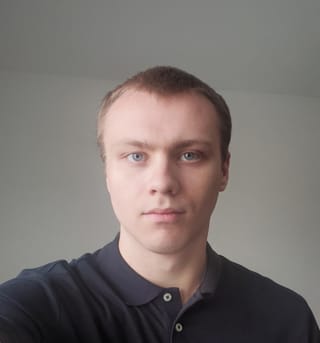
Colson Potter writes copious fiction and nonfiction, including a weekly Proverbs post and his blog at Creational Story.