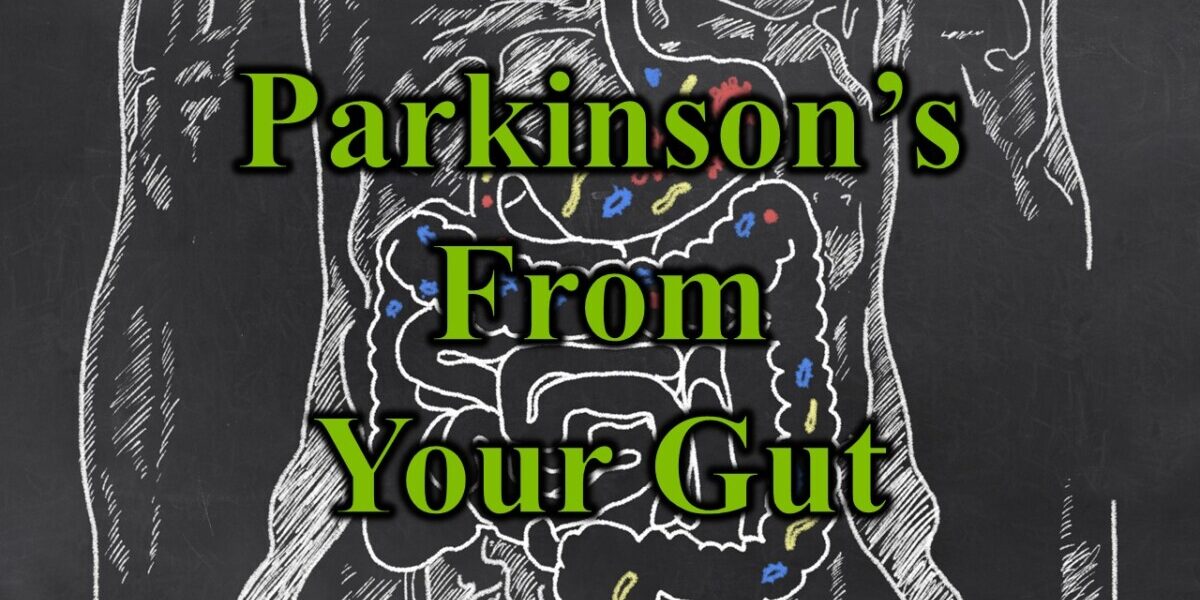
The wrong thing in the wrong place at the wrong time has bad results- including bad mouth bacteria moving into your gut, triggering brain inflammation that looks like Parkinson’s disease. In assessing gut brain interactions, we must remember two things. First, our guts start at the mouth. Second, different sections of the gut should have different microbiomes; a mouth bacteria shouldn’t be spreading to the colon. This research found that Streptococcus mutans, a bacteria that commonly causes cavities, can cause even bigger problems if it colonizes our colons.
Parkinson’s disease affects 1-2% of people over 65 years old across the world, causing a lot of disabilities and, ultimately, earlier death. It primarily affects coordination and movement but advances to other neurological dysfunction over its progression. As other investigations pointed towards triggers from gut bacteria, this research hoped to pin down the guilty bacteria more clearly.
As researchers compared gut microbiome results from patients with Parkinson’s disease versus those without, Streptococcus mutans stood out. They also found that both an enzyme and a metabolic byproduct made by this bacteria were higher in the patients’ blood and gut. The byproduct had also been linked to the loss of dopamine nerve cells which are the primary target with Parkinson’s disease. Lots of smoking guns pointed in the same direction.
With all of that in mind, the researchers moved to a mouse model where they could control whether or not this bacteria was present in the mice, as well as measure blood levels of the enzyme and byproduct. At the end, they could examine mouse brains to see if any Parkinson’s-type damage had occurred in the mice with the bacteria. When they found confirmatory pathways, they blocked a protein complex called mTORC1 to see if they could block the effects.
In this multilayered experiment, they found clear clues all along the way. When they inoculated the mice guts with the Streptococcus mutans or genetically modified E. coli bacteria with the same enzyme and byproduct ability, they found brain inflammation in the mice. When they then blocked the mTORC1 complex, these changes were significantly limited. The smoking gun appeared to have Streptococcus mutans’ fingerprints all over it.
While this experiment does not prove that all Parkinson’s disease patients have their disease thanks to a mouth bacteria, it does encourage us to brush out teeth as well as work on gut health. Our gut starts just past our lips and that brushing might lower your chance of Parkinson’s disease. If we get bad bacteria in our mouths from poor dental care (brushing/ flossing), then that bacteria can get further down into our colon. If that bacteria happens to be Streptococcus mutans, then we may be at higher risk for brain conditions like Parkinson’s disease.
Helping our patients prevent unhealthy futures is important to helping them restore healthier, more abundant lives. With that in mind, don’t forget to brush your teeth tonight, and ask your dentist about this bacteria.
Get started with Sanctuary today!
Click below to schedule your first conversation with our Patient Support Team.
Original Article:
Hyunji Park, Jiwon Cheon, Hyojung Kim, Jihye kim, Jihyun Kim, Jeong-Yong Shin, Hyojin Kim, Gaeun Ryu, In Young Chung, Ji Hun Kim, Doeun Kim, Zhidong Zhang, Hao Wu, Katharina R. Beck, Fredrik Bäckhed, Han-Joon Kim, Yunjong Lee, Ara Koh. Gut microbial production of imidazole propionate drives Parkinson’s pathologies. Nature Communications, 2025; 16 (1) DOI: 10.1038/s41467-025-63473-4
Thanks to Science Daily:
Pohang University of Science & Technology (POSTECH). “Harmful mouth bacteria may trigger Parkinson’s disease.” ScienceDaily. ScienceDaily, 6 January 2026. <www.sciencedaily.com/releases/2026/01/260106001916.htm>.
Sanctuary Functional Medicine, under the direction of Dr Eric Potter, IFMCP MD, provides functional medicine services to Nashville, Middle Tennessee and beyond. We frequently treat patients from Kentucky, Alabama, Mississippi, Georgia, Ohio, Indiana, and more... offering the hope of healthier more abundant lives to those with chronic illness.

Dr. Eric Potter graduated from Vanderbilt Medical School and then went on to specialize in internal medicine (adult) and pediatric care, spending significant time and effort in growing his medical understanding while caring for patients from all walks of life.