

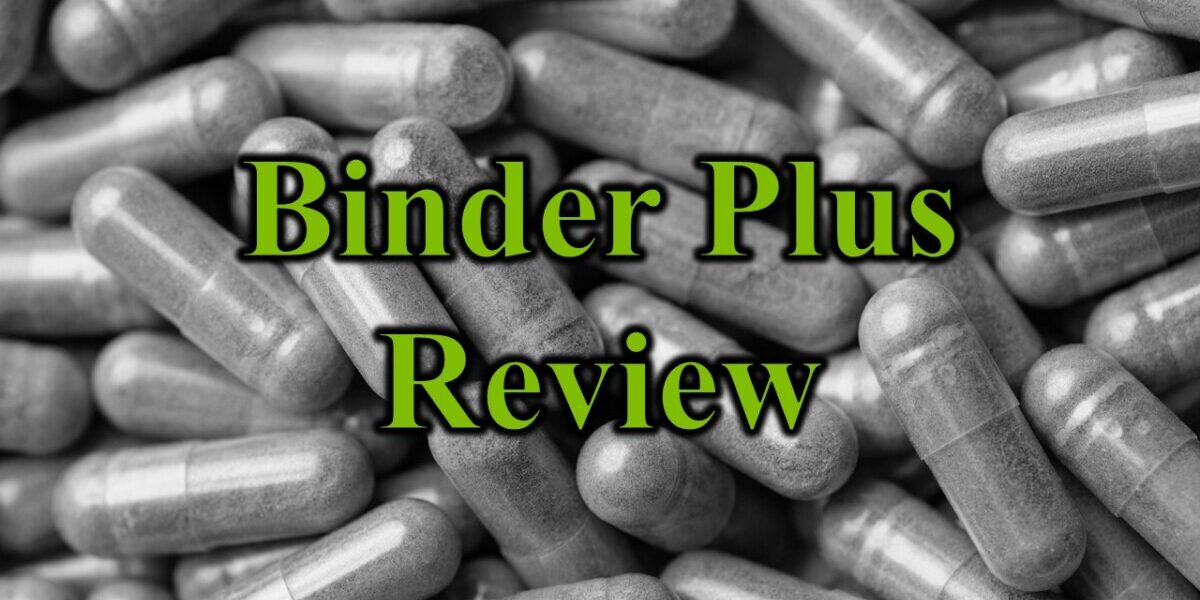
Given our drive to always improve, Sanctuary’s clinical team recently altered a key ingredient in our mold detox program by replacing one core binder product with Binder PlusTM from Nutramedix. Our patients deserve to know the reason for our change and so this article will review some ingredients in our prior binder and then explain why this new product is a step up.
The quick story, if you read nothing else, is that Binder PlusTM offers 2 additional binding ingredients at a lower price, in a bottle that lasts twice as long. This allows a slightly broader detox ability while cutting costs just a little and adding convenience of having to order fewer bottles. We know our patients need us to guide them to the best products at the best prices, so besides providing as much of a discount as we can on supplements, we also choose the best and most economical options in the first place.
For those wanting more details and a refresher on different binders, keep reading.
Binder PlusTM offers a multi-modal detox in a single product for our biotoxin patients suffering from mold toxicity, Lyme, disease, toxic algae, and Bartonella among others. Over time, we may shift focus to a single agent such as clay or charcoal or cholestyramine alone when we find only 1 toxin remaining, but in the beginning nearly all patients have a mix of toxins. In the beginning of detoxification, patients appreciate a combination therapy in Binder PlusTM as it avoids needing to have 4-5 extra supplement bottles sitting around. This one product includes with zeolite clay, bentonite clay, charcoal, aloe, chitosan, and fulvic acid, which makes detox more effective and a little simpler.
From a big picture viewpoint, the goal for using this product is to absorb toxins in the GI tract as it passes through and carry those toxins out with the stool. This is the basic premise of binder therapy. While this is not the only means of detoxification in functional medicine, as some toxins which can not be easily metabolized or for fat soluble toxins, binder therapy can be the most effective means. When combined with the other modalities like glutathione (oral or IV) and enzymatic modifiers (speed up the breakdown of a toxin), the combination program is quite effective.
This “binder” therapy works at a molecular level. Different binders possess different “superpowers” but in general, they simply possess a very strong attraction to the toxins being targeted. This strong attraction means they collect the toxins like a sponge as they go through the intestines and carry them out the door. The mechanism of the attraction varies. Sometimes, it is by the electrical charges, for charged substances like metal ions. Sometimes it is by the lack of electrical charges, for fat-soluble toxins.
For the ones in the GI tract, these attractions are usually not permanent (i.e. not a chemical bond change), which means they can eventually let go and allow reabsorption into the blood stream if the stool is not removed regularly. For that reason, 1-2 daily bowel movements per day are ideal. Often, a little help is needed since charcoal and clay in this product can trigger constipation. Fiber, magnesium, aloe, and other products can help, as well as a fiber healthy diet.
Binder PlusTM offers the benefits of Zeolite clay, bentonite clay, charcoal, Aloe, inulin, chitosan, and fulvic acids in one capsule. Without going into detail as to which binder works for which toxin, the primary point is that using multiple binders means more toxins are removed than if only one binder is chosen at a time. Even with urine testing for mold toxins, we still have a limited list of toxins we can test for. Depending on that single urine test to emphasize one binder and ignore another in the early parts of therapy is unwise.
Zeolite clay comes from volcanic or synthetic origins as crystalline aluminosilicates. Their 3-dimensional and negatively charge structure enables them to trap other molecules like toxins. Their structure otherwise does not react with food or body fluids, making them rather safe. Since studies have not been performed in pregnant women, we limit or avoid their use during that time, but otherwise, they have rare side effects besides some constipation. At most, they may trigger some detox reactions as they help the body to release stored up toxins.
Bentonite Clay as a natural internal or external remedy has been around for centuries. As an aluminum phyllosilicate clay, extensive literature (Afriyie-Gyawu et al 2005, Afriyie-Gyawu etal 2008, Wang et al 2005, Elmore 2003, and Mitchell 2014) demonstrates its safety through topical use or ingestion. Its polycationic structure (positive ions) attracts negatively charged molecules. Carson and Smith 1983 demonstrated its binding of T-2 mycotoxin in rats. Several studies cited in Moosavi 2017 listed studies demonstrating the binding of aflatoxins by Bentonite Clay as well as other studies demonstrating benefits with other toxin exposures.
Activated charcoal comes from previously strongly heated organic material (wood or other plant material) with minimal oxygen that is pulverized and activated by pyrolysis. Pyrolysis removes volatile substances and expands the surface area of the charcoal to greatly increase the available surface area with millions of microscopic pores (Karaman 2014). Used as medicine both by ancient cultures and by the modern medical establishment, it is recognized as an effective absorbent for many but not all toxins. It is not recommended for corrosive toxins (like acids), for iron or heavy metals, for organic solvents, or for cyanide.
Activated charcoal works when ingested; the toxic substances enter the millions of pores in the charcoal and are trapped by electrostatic attraction. The charcoal continues through the GI tract, carrying the toxins, and leaves in the stool, taking the toxins with it. This method is effective when the toxin ingestion is recent or if the toxin is eliminated by bile excretion from the liver. It is considered relatively safe at various dosages when used short term. The main concern is for use acute toxic ingestions, during which the patient might vomit and aspirate the charcoal into their lungs, or when a corrosive toxin might allow the charcoal to pass through into the abdominal cavity. It is otherwise considered safe in pregnancy and during breastfeeding years, when used short term (Natural Medicines). In one study, it appeared safe after 3 years of use (Gao et al 2019).
Part 2 of this Supplement Review is Coming Soon
References:
Part 1
Afriyie-Gyawu E, Mackie J, Dash B, et al. (2005). Chronic toxicological evaluation of dietary NovaSil clay in Sprague-Dawley rats. Food Addit Contam, 22:259–69.
Afriyie-Gyawu E, Wang Z, Ankrah NA, et al. (2008). NovaSil clay does not affect the concentrations of vitamins A and E and nutrient minerals in serum samples from Ghanaians at high risk for aflatoxicosis. Food Addit Contam Part A Chem Anal Control Expo Risk Assess, 25:872–84.
Elmore AR, Cosmetic Ingredient Review Expert Panel (2003). Final report on the safety assessment of aluminum silicate, calcium silicate, magnesium aluminum silicate, magnesium silicate, magnesium trisilicate, sodium magnesium silicate, zirconium silicate, attapulgite, bentonite, Fuller’s earth, hectorite, kaolin, lithium magnesium silicate, lithium magnesium sodium silicate, montmorillonite, pyrophyllite, and zeolite. Int J Toxicol, 22 Suppl 1:37– 102.
Gao Y, Wang G, Li Y, Lv C, Wang Z. Effects of oral activated charcoal on hyperphosphatemia and vascular calcification in Chinese patients with stage 3-4 chronic kidney disease. J Nephrol. 2019;32(2):265-72.
Karaman R. Novel Modified Bentonite-Montmorillonite and Activated Charcoal Complexes for Detoxification. International Journal of Clinical Toxicology.2014;2(2):37-41
Mitchell NJ, Kumi J, Aleser M, et al. (2014). Short-term safety and efficacy of calcium montmorillonite clay (UPSN) in children. Am J Trop Med Hyg, 91:777–85.
Moosavi M. (2017). Bentonite Clay as a Natural Remedy: A Brief Review. Iranian journal of public health, 46(9), 1176–1183.
Natural Medicines Comprehensive Database. Professional Monograph: Activated Charcoal. https://naturalmedicines.therapeuticresearch.com/databases/food,-herbs-supplements/professional.aspx?productid=269/. Accessed 12/08/2021.
Phillips, T. D., Wang, M., Elmore, S. E., Hearon, S., & Wang, J. S. (2019). NovaSil clay for the protection of humans and animals from aflatoxins and other contaminants. Clays and clay minerals, 67(1), 99–110. https://doi.org/10.1007/s42860-019-0008-x
Wang, M., Hearon, S. E., & Phillips, T. D. (2020). A high capacity bentonite clay for the sorption of aflatoxins. Food additives & contaminants. Part A, Chemistry, analysis, control, exposure & risk assessment, 37(2), 332–341. https://doi.org/10.1080/19440049.2019.1662493
Wang JS, Luo H, Billam M, et al. (2005). Short-term safety evaluation of processed calcium montmorillonite clay (NovaSil) in humans. Food Addit Contam, 22:270–9.
Sanctuary Functional Medicine, under the direction of Dr Eric Potter, IFMCP MD, provides functional medicine services to Nashville, Middle Tennessee and beyond. We frequently treat patients from Kentucky, Alabama, Mississippi, Georgia, Ohio, Indiana, and more... offering the hope of healthier more abundant lives to those with chronic illness.

Dr. Eric Potter graduated from Vanderbilt Medical School and then went on to specialize in internal medicine (adult) and pediatric care, spending significant time and effort in growing his medical understanding while caring for patients from all walks of life.


1 Comment