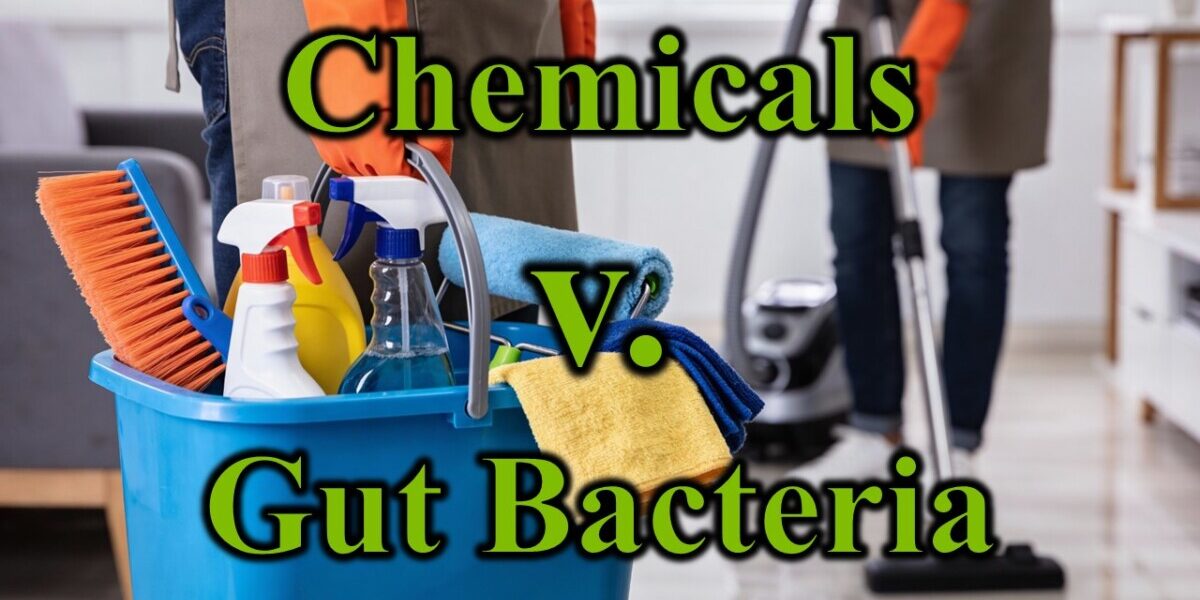
In the old days, understanding toxicity meant studying a toxin’s effects on our metabolism, but today we know that the roughly 4,500 different types of bacteria in our GI tract also matter to the toxin’s effects. While many of the present world’s identified chemicals may not directly affect our metabolic processes, their effects on the bacteria in our guts could have negative secondary impacts on our health. As our understanding advances in how these bacteria interact with our health, we must review the list of chemicals which we allow ourselves to be exposed to in this present toxic world.
Tens of Thousands of Industry Chemicals
The tens of thousands of chemicals industry produces already have an impressive potential effect on our health. Even before the chemicals touch our gut bacteria we have an uphill battle there. Now that we know how big a role our gut bacteria play in keeping us health or causing disease, we should be going back to the drawing board and checking what these countless chemicals do to the little residents of our colons. We know that antibiotics taken for bacterial infections can cause dysbiosis and yeast overgrowth. Why should we be surprised that these other chemical exposures might change our gut flora?
Rather than start with an overwhelming number of potential chemicals, researchers at the University of Cambridge chose 1076 possible chemicals to see how they affected 22 gut bacterial species. That already created over 22,000 possible measurements to follow. They exposed the bacteria to these chemicals in a lab and used machine learning to determine which chemicals demonstrated the greatest effects.
Surprisingly Large Effects
They were surprised to find how many chemicals which supposedly should have no adverse effects actually causes significant change in gut bacteria. They expected significant effects from pesticides, herbicides, and similar chemicals aimed at biology. They did not expect the same from flame retardants, plasticizers, and more.
While we must acknowledge that fully-accurate in vivo studies (i.e. human or animal studies) are challenging and sometimes impossible, their investigation into the actual mechanism of the effects raises concerns. The chemicals identified as impactful showed a variety of mechanisms. Some inhibited growth metabolic pathways. Some altered genetics through mutations. The preserved susceptibilities to different chemicals across genetically similar bacteria indicates a sharing mechanisms. even if the exact details aren’t yet known.
We Can’t Ignore It Any Longer
Obviously, neither medical science nor public policy regarding industrial production can afford to ignore this any longer. Many of the chemicals chosen for testing have been identified either in public water supplies or found in human samples by other studies. Without a clearer understanding of how these chemical affect our gut bacteria, we are walking through a dark room with lots of Legos on the floor, waiting to be stepped on.
What We Can Do Now
Until we can turn the room lights on and clear out the Legos targeting our gut bacteria, what can we do? For now, it comes down to using wisdom and present knowledge to limit chemical exposure and optimize gut health through healthy diets. With toxins in our water supply and so many chemicals sprayed on our food supply, we can’t avoid them 100%. At most we can lower exposure through wise choices while including whole foods with good fiber and ferments in our daily nutrition plan. Pursuing healthier, more abundant lives means making wise choices day in and day out regarding toxins and gut health.
Other Articles on Gut Health:
Original Article:
Indra Roux, Anna E. Lindell, Anne Grießhammer, Tom Smith, Shagun Krishna, Rui Guan, Deniz Rad, Luisa Faria, Sonja Blasche, Kaustubh R. Patil, Nicole C. Kleinstreuer, Lisa Maier, Stephan Kamrad, Kiran R. Patil. Industrial and agricultural chemicals exhibit antimicrobial activity against human gut bacteria in vitro. Nature Microbiology, 2025; 10 (12): 3107 DOI: 10.1038/s41564-025-02182-6
Thanks to Science Daily
University of Cambridge. “Everyday chemicals are quietly damaging beneficial gut bacteria.” ScienceDaily. ScienceDaily, 5 January 2026. <www.sciencedaily.com/releases/2026/01/260104202815.htm>.
Sanctuary Functional Medicine, under the direction of Dr Eric Potter, IFMCP MD, provides functional medicine services to Nashville, Middle Tennessee and beyond. We frequently treat patients from Kentucky, Alabama, Mississippi, Georgia, Ohio, Indiana, and more... offering the hope of healthier more abundant lives to those with chronic illness.

Dr. Eric Potter graduated from Vanderbilt Medical School and then went on to specialize in internal medicine (adult) and pediatric care, spending significant time and effort in growing his medical understanding while caring for patients from all walks of life.