Skip to content
Search:
Search
Facebook page opens in new windowInstagram page opens in new windowYouTube page opens in new window
Sanctuary Functional Medicine
Whole person medical care for the glory of God.
Sanctuary Functional MedicineSanctuary Functional Medicine
615 721 2001Our Current Address

4085 Mallory Ln, Suite #200,
Franklin, TN 37067

Phone: 615-721-2001

BEGIN YOUR JOURNEYPATIENT LOGIN
  • My Story
  • About Us
    • Testimonials
    • Meet Our Functional MD
    • Meet Our Team
    • Our Mission
    • SFM Careers
  • Programs
    • The Intensive Program
    • Semi-Intensive Program
    • Functional Wellness Program
    • Direct Primary Care
    • Nutrition Counseling
    • Integrative Therapist
  • Conditions
    • Intensive / Semi-Intensive Conditions
      • Mold Toxicity
      • Lyme and Tick Borne Infections
      • PANS & PANDAS
      • Autism and ADHD
      • Mast Cell Activation Syndrome
      • Immune Dysfunction & Inflammation
      • Autoimmune
      • GI
      • Thyroid and Other Hormone Disorders
      • Fatigue
    • Functional Wellness Conditions
      • Heart Health
      • Weight Management and Blood Sugar Control
      • Female Hormones Health
      • Male Hormones and Health
      • Thyroid Health – Hypothyroid and Hyperthyroid
  • Patient Resources
    • Billing
    • Get Healthier Blog
    • Mold Education
      • Which Molds Make You Sick
      • Not Surprising COVID and Mold
      • Stress Can Amplify Molds Effects
      • The Exposure Matters
      • Water Damaged Buildings are Mold Gardens
      • Why Are More People Getting Sick from Mold?
      • Genetics Plays a Big Role with Mold
    • Financial Support
    • Areas We Serve
      • Holistic Doctor in Franklin, TN | Sanctuary Functional Medicine
      • Holistic Doctor in Nashville, TN | Sanctuary Functional Medicine
    • Frequently Asked Questions
  • Blog
  • Contact
    • Contact Us
    • Visit Nashville
  • My Story
  • About Us
    • Testimonials
    • Meet Our Functional MD
    • Meet Our Team
    • Our Mission
    • SFM Careers
  • Programs
    • The Intensive Program
    • Semi-Intensive Program
    • Functional Wellness Program
    • Direct Primary Care
    • Nutrition Counseling
    • Integrative Therapist
  • Conditions
    • Intensive / Semi-Intensive Conditions
      • Mold Toxicity
      • Lyme and Tick Borne Infections
      • PANS & PANDAS
      • Autism and ADHD
      • Mast Cell Activation Syndrome
      • Immune Dysfunction & Inflammation
      • Autoimmune
      • GI
      • Thyroid and Other Hormone Disorders
      • Fatigue
    • Functional Wellness Conditions
      • Heart Health
      • Weight Management and Blood Sugar Control
      • Female Hormones Health
      • Male Hormones and Health
      • Thyroid Health – Hypothyroid and Hyperthyroid
  • Patient Resources
    • Billing
    • Get Healthier Blog
    • Mold Education
      • Which Molds Make You Sick
      • Not Surprising COVID and Mold
      • Stress Can Amplify Molds Effects
      • The Exposure Matters
      • Water Damaged Buildings are Mold Gardens
      • Why Are More People Getting Sick from Mold?
      • Genetics Plays a Big Role with Mold
    • Financial Support
    • Areas We Serve
      • Holistic Doctor in Franklin, TN | Sanctuary Functional Medicine
      • Holistic Doctor in Nashville, TN | Sanctuary Functional Medicine
    • Frequently Asked Questions
  • Blog
  • Contact
    • Contact Us
    • Visit Nashville

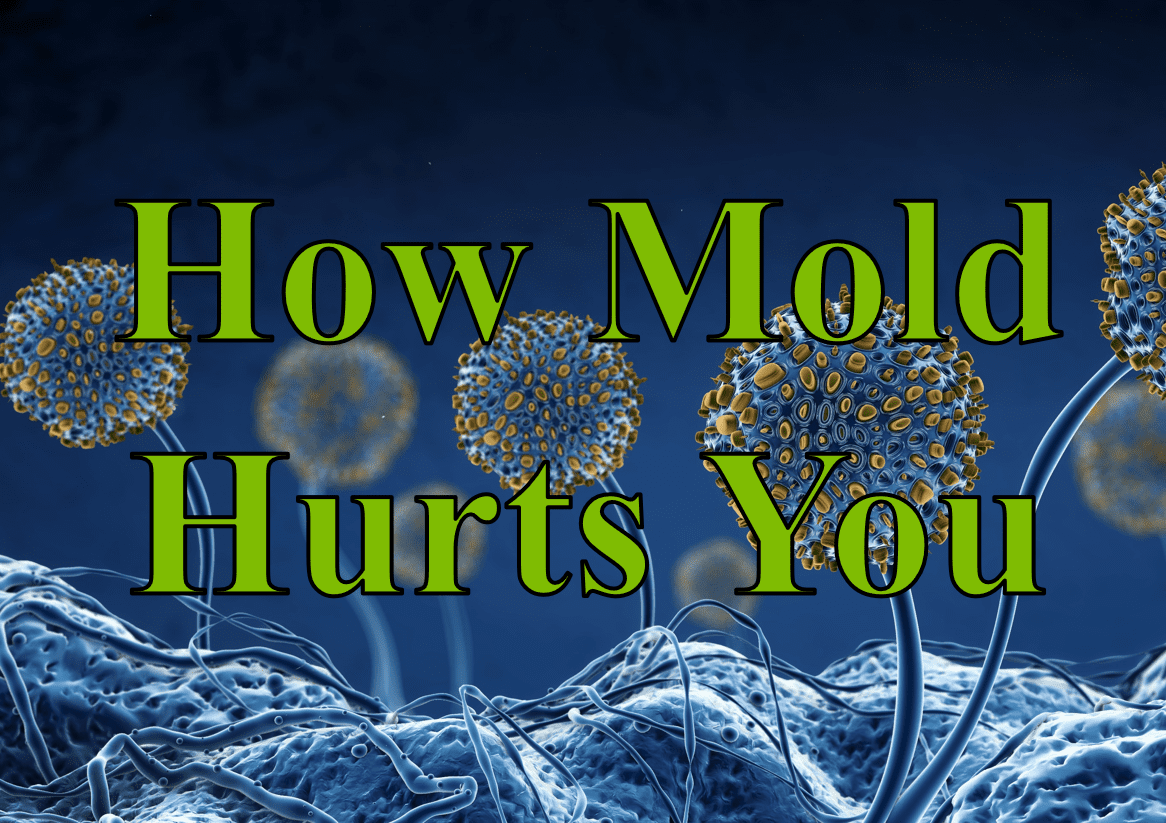
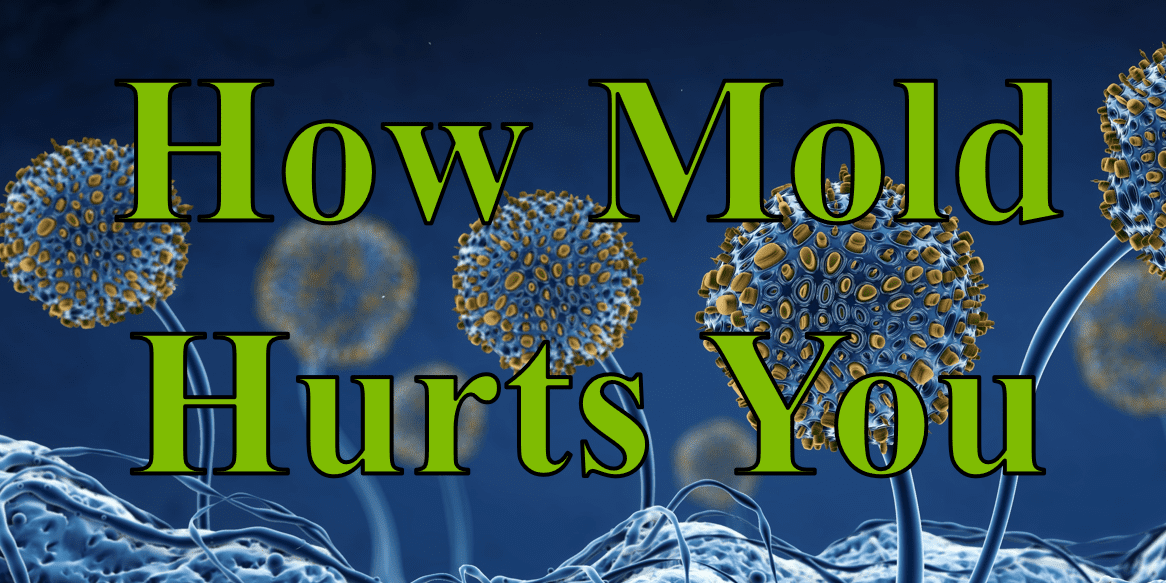
How Mold Hurts You

For those who suffer from mold toxicity, ‘Is this mold?’ is rarely relevant. They know the answer. On the other hand, they really want to know how or why it is happening.  They see others around them in the same environment who are not sick, but they themselves suffer greatly.  In the end, it comes down to a combination of genes and environment.  Many across the world have genetics which make it unlikely that mold will affect them, unless they reach extremely high exposure levels.  Some, however, can become very sick at a much lower levels of exposure.  This article looks at the other half of the equation, the environment, considering which compounds from molds can cause which biochemical changes, thereby leading to disease.

The article in focus describes a few different mechanisms by which mold can adversely affect human health.  These include Beta glucans, hydrophobins, volatile organic compounds (VOCs), mycotoxins, and stachylsins.  While mycotoxins are likely the primary non-infectious and non-allergenic mechanisms, the others deserve some attention.

The beta glucans arise as part of the cell walls of the molds but can also be produced by plants and some bacteria.  Our bodies can react to these beta glucans through receptors on our immune cells, and trigger release of cytokines (immune chemical messengers) and IgE antibodies (allergic antibodies).  They can then trigger different immune cells called T cells to change their behavior.

Hydrophobins may play a role in invasive forms of aspergillosis which infect the lungs of immunocompromised patients.  They may also play a role in some mold allergic reactions.

VOC’s from microbes (MVOC’s) are smaller molecules than true mycotoxins.  They are a mix of chemicals that easily evaporate and contribute heavily to the musty smell of moldy buildings.  Besides causing the odor, they may also trigger other neurologic reactions through binding a trigeminal nerve ending.  These symptoms include slowed reflexes and dizziness (1,2), but at higher concentrations may lead to mucous membrane irritation, headaches, attention deficits, and more.  Some patients with asthma respond to these MVOC’s differently than others. The MVOCs may also contribute to motor and sensory changes (3).

Stachylysins arise from Stachybotrys chartarum, better known as “black mold”.  This mold garners much more attention and fear then most of its relatives.  While it does produce other, more regular mycotoxins like satratoxin, black mold may also produce this hemolysin molecule.  Basically, Stachylysins and other hemolysins are able to lyse or break open red blood cells.  This is an obvious problem for health.  It may explain the past outbreaks of pulmonary hemosiderosis, in which infants who were exposed to Stachybotrys developed hemolysis of their red cells in their lungs.

Finally, we reach the likely primary mechanism through which molds negatively impact human health, mycotoxins. These “low molecular weight, non-proteinaceous, secondary organic metabolites” are toxic to other organisms and may be volatile or non-volatile.  While not absolutely necessary for the growth and development of the fungi, they provide some competitive advantages to the mold by helping to kill off neighboring organisms in their environment.

Much debate rages over whether or not these chemicals truly contribute to human disease.   Meanwhile, the agricultural industry and animal studies clearly demonstrate that these toxins harm animals (4,5) even through inhalation.  Hundreds of studies link them with animal and human disease, yet mainstream medicine continues to balk at the reality.

The toxins exert a variety of effects at various entry points either acting individually or synergistically (6).  They can come through inhalation, ingestion, or transdermal.  They can initiate harm and cause symptoms in the respiratory, gastrointestinal, immune, hormone, neurologic, dermal, or other systems.  Their effects depend on entry route, total dose, and synergism between different toxins as well as the health status of the exposed individual.

The comprehensive list of how these mycotoxins set off a domino avalanche of dysfunction and symptoms would require a book or two at least.  For now, I will restate that various toxins tip over dominoes in the immune system, the GI tract, the mitochondria of our cells, the hormonal system, and our neurologic system which lead to the cascade of negative events.  Once the domino falls in that system, further dominoes continue to fall spilling over into other systems and processes.  The domino avalanche continues as far as the interconnections of our body systems extend.

At the end of the day, the proof in the literature and in the clinic cannot and should not be ignored.  While conventional medicine does not understand mold toxicity completely, that does not mean such toxicity does not exist.  Medicine has always advanced by shining light into previously dark areas of understanding and should continue that practice with mold toxicity instead of dismissing it.   Papers like this support our clinic practices of identifying mold toxic patients, guiding them out of mold exposure, and helping them to restore healthier more abundant lives.  We are not waiting on conventional medicine to get their act together.


Primary reference:

McGinnis, Michael R. “Pathogenesis of indoor fungal diseases.” Medical mycology vol. 42,2 (2004): 107-17. doi:10.1080/13693780410001661473


Secondary references:

  1. Haw KM, Connell DW, Richardson BJ. Quantitative structureactivity relationships for nasal pungency thresholds of volatileorganic compounds. Toxicol Sci 1999; 47: 93/98.
  2. Otto D, Molhave L, Rose G, et al. Neurobehavioral and sensory irritant effects of controlled exposure to a complex mixture of volatile organic compounds. Neurotoxicol Teratol 1990; 12: 649/ 652.
  3. Ammann HM. Is indoor mold contamination a threat to health? (2001) Available at http://www.doh.wa.gov/ehp/oechas/mold. html
  4. Nikulin M, Reijula K, Jarvis BB, et al. Effects of intranasal exposure to spores of Stachybotrys atra in mice. Fundam Appl Toxicol 1997; 35: 182/188
  5. Pang VF, Lambert RJ, Felsburg PJ, et al. Experimental T-2 toxicosis in swine following inhalation exposure: clinical signs and effects on hematology, serum biochemistry, and immune response. Fundam Appl Toxicol 1988; 11: 100/109
  6. Weidenborner M. Encyclopedia of Food Mycotoxins. Heidelberg: Springer Verlag, 2001

Sanctuary Functional Medicine, under the direction of Dr Eric Potter, IFMCP MD, provides functional medicine services to Nashville, Middle Tennessee and beyond. We frequently treat patients from Kentucky, Alabama, Mississippi, Georgia, Ohio, Indiana, and more... offering the hope of healthier more abundant lives to those with chronic illness.

Eric Potter

Dr. Eric Potter graduated from Vanderbilt Medical School and then went on to specialize in internal medicine (adult) and pediatric care, spending significant time and effort in growing his medical understanding while caring for patients from all walks of life.

Categories: Environmental Toxins, Mold and BiotoxinsBy Eric PotterAugust 30, 2022Leave a comment
Share this post
Share on FacebookShare on Facebook Share on XShare on X Pin itShare on Pinterest Share on LinkedInShare on LinkedIn

Post navigation

PreviousPrevious post:Crying Out to Be HeardNextNext post:Proverbs 13:5

Related posts

Battle of the Binders
August 17, 2026
Mycotoxins Exacerbating Autoimmunity
August 10, 2026
Moldy Sinks?
August 4, 2026
Mold Toxins Hurt Children
August 3, 2026
Plastics in Mom Gives Baby Anxiety
July 20, 2026
Some Say Mold Is Harmless….
June 30, 2026

Leave a Reply Cancel reply

Your email address will not be published. Required fields are marked *

Post comment

Recent Articles
  • Proverbs 19:26
    September 2, 2026
  • MASH Peptides For Your Liver
    September 1, 2026
  • How to Listen to Your Body When It Talks to You
    August 31, 2026
  • Proverbs 19:25
    August 26, 2026
  • Vitamin C & Long-Term Brain Health
    August 25, 2026
  • Rice Bran’s Possible Future in IBS Therapy
    August 24, 2026
Sanctuary Functional Medicine
4085 Mallory Ln
Suite #200,
Franklin, TN 37067

615-721-2001

Direct Primary Care

1001 Merylinger Ct.

Franklin, TN 37067

​615-437-6008​


Integrative Therapy & Classes

Moving to DPC Office May 2026

Hours

Monday - Friday
8:00 am - 4:00 pm

Holiday Hours

Careers


This is an accessible workplace. Persons with disabilities are welcome to apply.

Follow Us on Social


This is an accessible workplace.

Persons with disabilities are welcome to apply.


Archives
  • September 2026
  • August 2026
  • July 2026
  • June 2026
  • May 2026
  • April 2026
  • March 2026
  • February 2026
  • January 2026
  • December 2025
  • November 2025
  • October 2025
  • September 2025
  • August 2025
  • July 2025
  • June 2025
  • May 2025
  • April 2025
  • March 2025
  • February 2025
  • January 2025
  • December 2024
  • November 2024
  • October 2024
  • September 2024
  • August 2024
  • July 2024
  • June 2024
  • May 2024
  • April 2024
  • March 2024
  • February 2024
  • January 2024
  • December 2023
  • November 2023
  • October 2023
  • September 2023
  • August 2023
  • July 2023
  • June 2023
  • May 2023
  • April 2023
  • March 2023
  • February 2023
  • January 2023
  • December 2022
  • November 2022
  • October 2022
  • September 2022
  • August 2022
  • July 2022
  • June 2022
  • May 2022
  • April 2022
  • March 2022
  • February 2022
  • January 2022
  • December 2021
  • November 2021
  • October 2021
  • September 2021
  • August 2021
  • July 2021
  • June 2021
  • May 2021
  • April 2021
  • March 2021
  • February 2021
  • January 2021
  • December 2020
  • November 2020
  • October 2020
  • September 2020
  • August 2020
  • July 2020
  • June 2020
  • May 2020
  • April 2020
  • March 2020
  • February 2020
  • January 2020
  • December 2019
  • November 2019
  • October 2019
  • September 2019
  • August 2019
  • July 2019
  • June 2019
  • May 2019
  • April 2019
  • March 2019
  • February 2019
  • January 2019
  • December 2018
  • November 2018
  • October 2018
  • September 2018
  • August 2018
  • July 2018
  • June 2018
  • May 2018
  • April 2018
  • March 2018
  • February 2018
  • January 2018
  • December 2017
  • February 2017
  • January 2017
  • December 2016
  • November 2016
  • October 2016
  • June 2016
  • February 2016
  • January 2016
  • December 2015
  • November 2015
  • September 2015
  • August 2015
  • July 2015
  • June 2015
  • May 2015
  • April 2015
  • March 2015
  • February 2015
  • January 2015
  • December 2014
  • November 2014
  • October 2014
  • September 2014
Categories
  • 'How to Listen' Series
  • 2023 Conference Series
  • Adult Wellness
  • Allergies and Eczema
  • Autism and ADHD
  • Autoimmune Issues
  • Christmas
  • COVID Collection
  • Environmental Toxins
  • Functional Medicine
  • Functional Pediatric Wellness
  • Gastrointestinal Health
  • General Functional Medicine
  • Heart and Metabolic Health
  • Hormonal Health
  • Immunity and Infections
  • Long Hauler COVID Summer Series
  • Lyme and Chronic Infections
  • Mast Cells
  • Mold
  • Mold and Biotoxins
  • Mold Education
  • MTHFR Genomics
  • Neurological Health
  • News of Interest
  • Nutrition
  • Nutrition Education
  • PANS and PANDAS
  • Patient Stories
  • Pediatric Wellness
  • Pediatrics
  • Professionals
  • Recipes
  • Research
  • Spiritual Health
  • Supplements
  • Uncategorized
  • Women's Health
Meta
  • Log in
  • Entries feed
  • Comments feed
  • WordPress.org

How Mold Hurts You


Sanctuary Functional Medicine, under the direction of Dr Eric Potter, IFMCP MD, provides functional medicine services to Nashville, Middle Tennessee and beyond. We frequently treat patients from Kentucky, Alabama, Mississippi, Georgia, Ohio, Indiana, and more... offering the hope of healthier more abundant lives to those with chronic illness.

By Colson PotterAugust 11, 2022Leave a comment
Share this post
Share on FacebookShare on Facebook Share on XShare on X Pin itShare on Pinterest Share on LinkedInShare on LinkedIn

Post navigation

Leave a Reply Cancel reply

Your email address will not be published. Required fields are marked *

Post comment

Ⓒ Sanctuary Functional Medicine 2025. All rights reserved.

Go to Top